Notice: Function _load_textdomain_just_in_time was called incorrectly. Translation loading for the business-form domain was triggered too early. This is usually an indicator for some code in the plugin or theme running too early. Translations should be loaded at the init action or later. Please see Debugging in WordPress for more information. (This message was added in version 6.7.0.) in /home2/mfkdxpmx/public_html/wp-includes/functions.php on line 6131
Calibration Services – TRUST

Instrument Types for Calibration

pressure

Pressure Calibration

We calibrate all varieties of pressure transducers and pressure sensors including :-

Pressure and Vacuum Gauges

Pressure Modules

Digital Pressure Gauges

Pressure Sensors

Analog Pressure

Pressure transducer

temp

Temperature Calibration

We calibrate all varieties of RTDs and thermocouples sensors including :-

Liquid-in-Glass and Infrared Thermometers and Thermocouples

Temperature Indicators and Dry Block Calibrators

Temperature Calibrators

Surface, Thermistor, and RTD Probes

RTD Simulators

Hot Plates

Other Probes and Sensors

ele531-512

Other Instruments

We calibrate all varieties of Electrical Instruments including :-

Luminance/Illuminance Instruments

Air Velocity Sensor

Flow Meter Sensor

Sound Level Meter

Wattmeter, RTD, and Power Supply

Stopwatch, Dosimeter, & Data Logger

Ohm Meter, Battery Supply, and CurrentShunt Calibration

Frequently asked questions

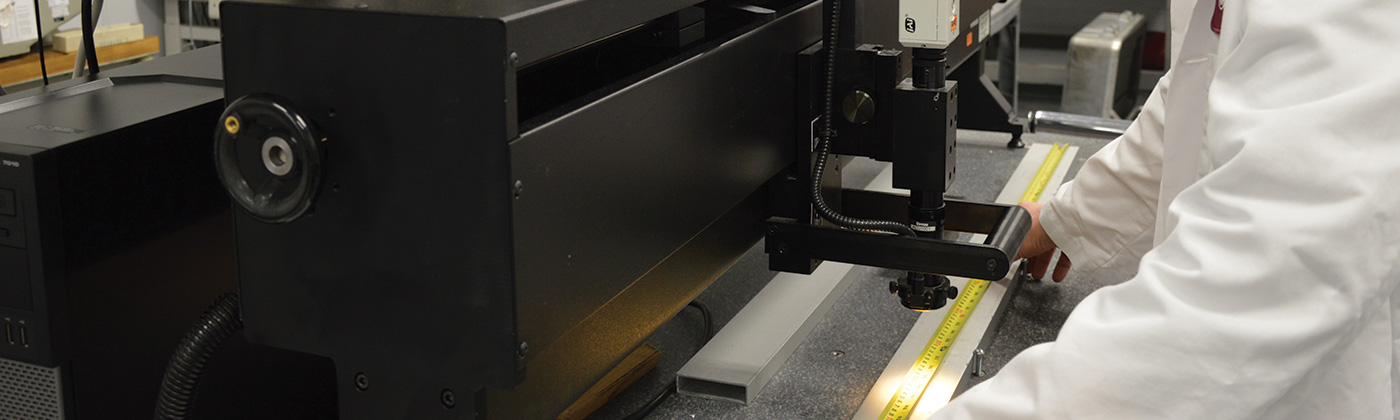
Formally, calibration is a documented comparison of the measurement device to be calibrated against a traceable reference standard/device.

The reference standard may be also referred to as a “calibrator.” Logically, the reference standard should be more accurate than the device to be calibrated. The reference standard should also be calibrated traceably.

Formally the calibration does not include adjustment or trimming, although in everyday language it is often included.

Formally, traceability is a property of the result of a measurement, through an unbroken chain of comparisons each having stated uncertainties.

In practice, traceability means that the reference standard has also been calibrated using an even higher-level standard. The traceability should be an unbroken chain of calibrations so that the highest-level calibration has been done in a National calibration center or equivalent.

So, for example, you may calibrate your process measurement instrument with a portable process calibrator. The portable process calibrator you used, should be calibrated using a more accurate reference calibrator. The reference calibrator should be calibrated with an even higher-level standard or sent out to an accredited or national calibration center for calibration.

Calibration uncertainty is a property of a measurement result that defines the range of probable values of the measurand.

Uncertainty means the amount of “doubt” in the calibration process, so it tells how “good” the calibration process was. Uncertainty can be caused by various sources, such as the device under test, the reference standard, calibration method or environmental conditions.

In the worst case, if the uncertainty of the calibration process is larger than the accuracy or tolerance level of the device under calibration, then calibration does not make much sense.


In industrial process conditions, there is various reason for calibration. Examples of the most common reasons are:

  • Accuracy of all measurements deteriorates over time
  • Regulatory compliance stipulates regular calibration
  • Quality System requires calibration
  • Money – money transfer depends on the measurement result
  • Quality of the products produced
  • Safety – of customers and employees
  • Environmental reasons
  • Various other reasons

The definition of calibration includes the word “documented.” This means that the calibration comparison must be recorded. This document is typically called a Calibration Certificate.

A calibration certificate includes the result of the comparison and all other relevant information of the calibration, such as equipment used, environmental conditions, signatories, date of calibration, certificate number, the uncertainty of the calibration, etc.

Most often when you calibrate an instrument, there is a tolerance limit (acceptance limit) set in advance for the calibration. This is the maximum permitted error for the calibration. If the error (the difference between DUT and reference) at any calibrated point is larger than the tolerance limit, the calibration will be considered as “failed.”

In the case of a failed calibration, you should take corrective actions to make the calibration pass.  Typically, you will adjust the DUT until it is accurate enough